

The suicide case of Deepak U, 41, a software engineer from Kozhikode has been making the headlines. The primary accused in the case is Shimjitha, 35, a social media creator. She filmed a video accusing Deepak of sexual misconduct. The video became viral across multiple social media platforms which led to an online discourse and reaction against Deepak.
His family expressed their grief and stated that her son was deeply distressed and felt that there was no point in living with this public humiliation. The police then filed a case against Shimjitha under Section 108 of Bharatiya Nyaya Sanhita for abetment of suicide. Local residents and political workers have insisted that she face more stringent charges, including murder.
This is not a one-off case where there has been media outrage over an allegedly false accusation. In December 2024, Atul Subhash committed suicide and in an 81-minute video, he blamed his estranged wife and her family of harassment.
He alleged that his then-wife had filed “false court cases” which accused him of cruelty, dowry harassment and other wrongdoings. He accused her family of extortion and blackmailing him to pay 30 million rupees to withdraw their case against him. On social media, netizens demanded justice for Subhash. They too demanded that strict penalties like charger of murder should be applied to his estranged wife. The police arrested her and her mother and her brother on the charge of abetment to suicide. She denied the charges.
In January 2025, Cabbie H Manjunath lit himself on fire because his wife, Nayana Raj refused to retract her divorce case against him. She had applied for divorce in 2022 and for two years, Manjunath tried to persuade her back. After repeated refusal, he set himself on fire. His family was distressed and filed a case against her and her family saying that the death was foul play.
Comments related to this death include-
“This is the height of cruelty. How many deaths of men are required to make govt draft a strong policy against the cruelty of women. All the laws are blindly supporting only women even if they are the vamps. Shame.”
In the same month, Nitin Padiyar from Indore, committed suicide and in his suicide note, he said:
“I, Nitin Padiyar, request the Indian government to change the law of the country, because women are misusing it. If you do not change this law and order, then every day, many boys and their families will continue to be ruined,” he added. He then proceeds to advice all youth to reconsider marriage and if they do get married, then to establish a formal agreement.
Police noted that there was a prior discord between the families and a case of domestic violence and dowry was registered against him. Details of the case were to be re-assessed as part of his suicide investigation. He claimed in his notes that the authorities were taking one-sided action in favour of his wife.
Comment for his case included:
“We need gender neutral laws!! Enough of these gender biased laws...women are taking a lot of advantage because of these laws....”
For all the above cases, social media outrage has been consistent. Many demand stringent penalties and some others question the gendered laws that exist in the country. These laws include; The Dowry Prohibition Act, 1961 (DPA); POSH Act, 2013; Protection of Women from Domestic Violence Act, 2005; and various sections of the BNS relating to sexual harassment.
These laws are based on the history and societal struggles women have faced. Dowry had been criminalised due to the alarming rate of dowry deaths. In the 60+ years of the act, it will not be an exaggeration to say that dowry is still prevalent, it is just hushed.
Cases filed under the DPA in 2023 were 15,489, which is a 14.16% increase from 2021 (13568 cases) and an increase of 56% from 2015 (9894 cases)
The rising numbers are indicative of how the tradition of demanding dowry persists in the country.
Similarly, the numbers for crimes against women over the years depict a trend. Sexual harassment cases fell under the Indian Penal Code (now BNS) and under some Special laws. Looking at primarily the IPC cases 2023 had 4,48,211 cases, which is a 4% increase from 2021 (428278 cases) and an increase of 42% from 2015 (3,14,575)
The rate of increase can be attributed to more women reporting their cases. It is important to note that this data is only of the cases reported. The social stigma, fear of further harassment or the lack of trust in the system are some of the many reasons why many women still do not report cases. An analysis by National Family Survey data by Livemint in 2018 said that 99% of sexual violence incidents go unreported.
However, the media has seen a rise in false accusation cases. Cases ended by the court as final report false in 2023 were 361 cases and 46 were stayed at the investigation stage i.e investigation have been put on hold. However, cases disposed of by the police as final report false in 2023 were 33,645. These numbers include the cases that were pending investigation the year prior. Considering the cases that were filed, the police disposal based on a false report is 7%.
Various Men’s rights activist groups like Vaastav Foundation and Save Indian Family Foundation hold sessions where they state, “Through calm participation and clear messaging, Vaastav highlighted an uncomfortable but necessary reality: legal imbalance and misuse of laws are destroying lives, families, and mental health, and ignoring this does not make society more equal—it makes it unjust.”
They also hold banners like-
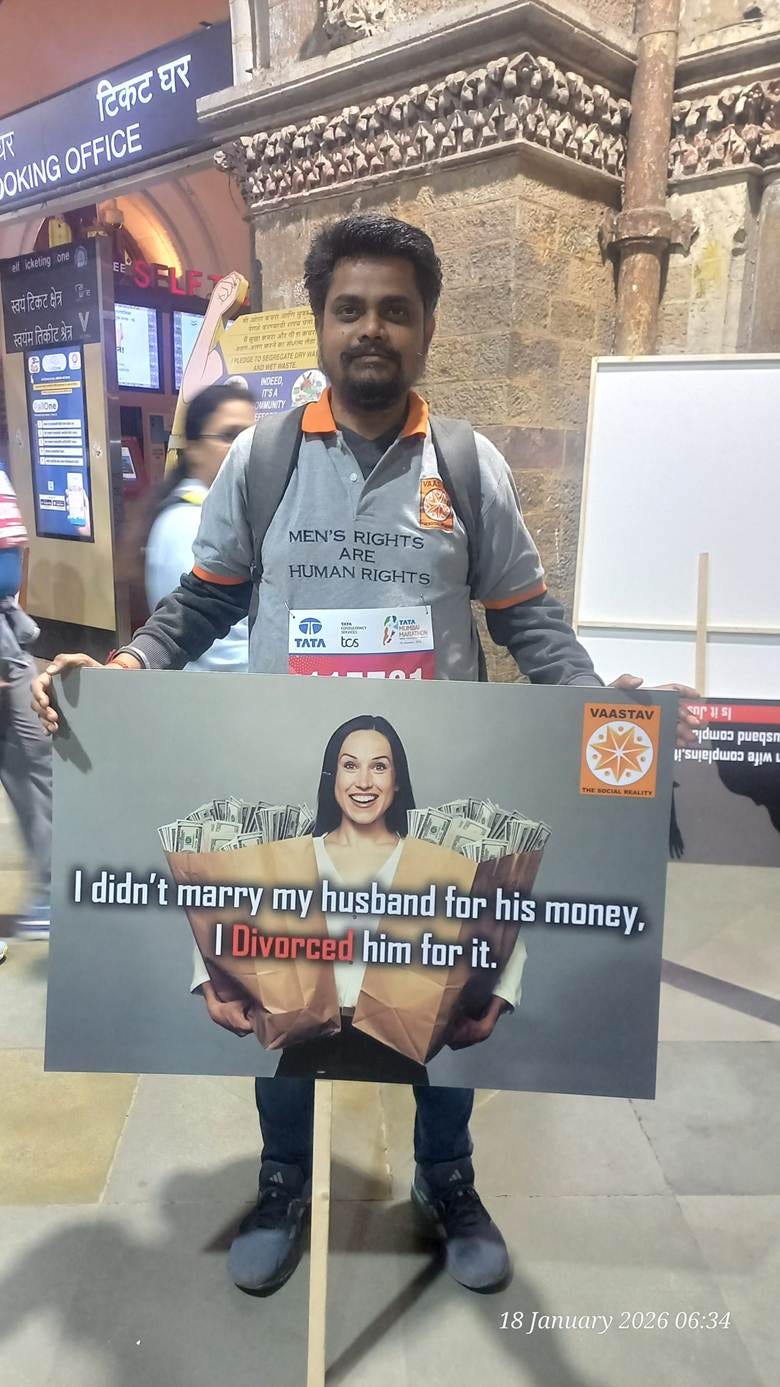
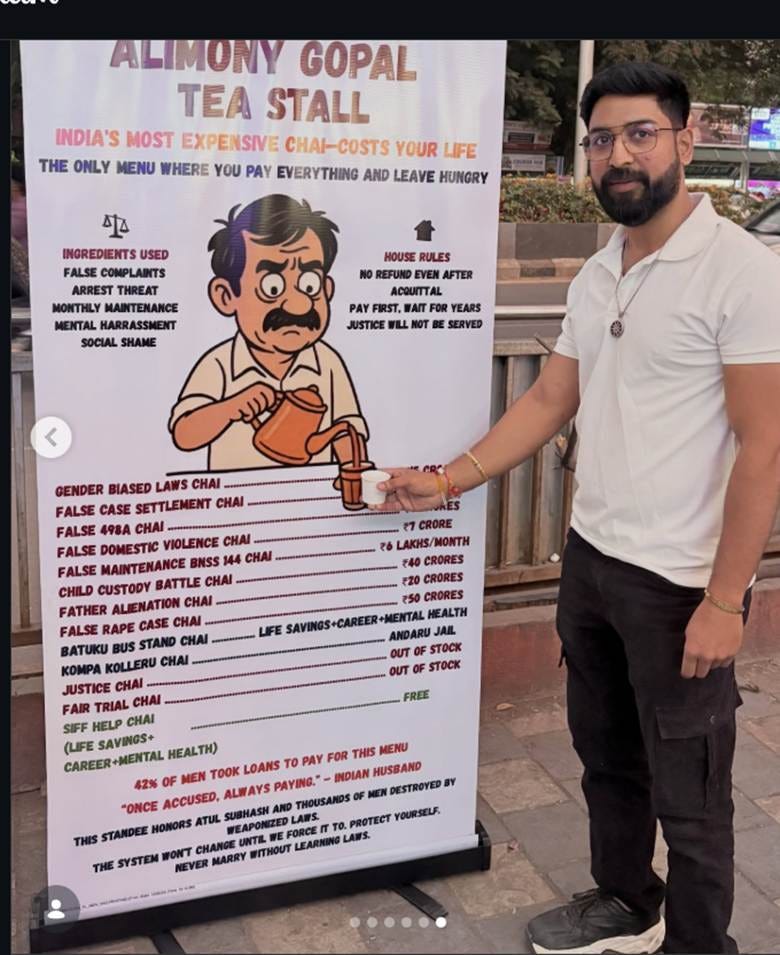
Lawyers like Adv. Vikas Nagwan also misquotes figures. In his episode with Raj Shamani he confidently said, “Almost 90% of cases that are registered by women against men are fake, only 10% are real.”
The misquoting and sensationalisation of the exceptional cases lead to cries that could overall be detrimental to the legal system and put several victims in grave danger.
In the above suicide cases of the men who alleged false accusations, a common thread was the lack of legal recourse sought.
A criminal litigation lawyer said, “The law did not fail him but society did. If he had waited for the application of the law, then if it was fake, he would have the justice he deserved. His innocence would prevail then, not now.”
Since the Delhi High Court in Ms Rajesh Wadhwa Vs The State Nct Of Delhi said that there is a trend of filing cases under sexual harassment sections of IPC, many have decided to focus on this sentence rather than the overwhelming number of cases related to perverse and continual harassment of women. To give weight only to the exceptional cases may result in more eyeballs to media reports but then to normalize extremely real and unfortunately frequent attacks on women is damaging to society as a whole too.